



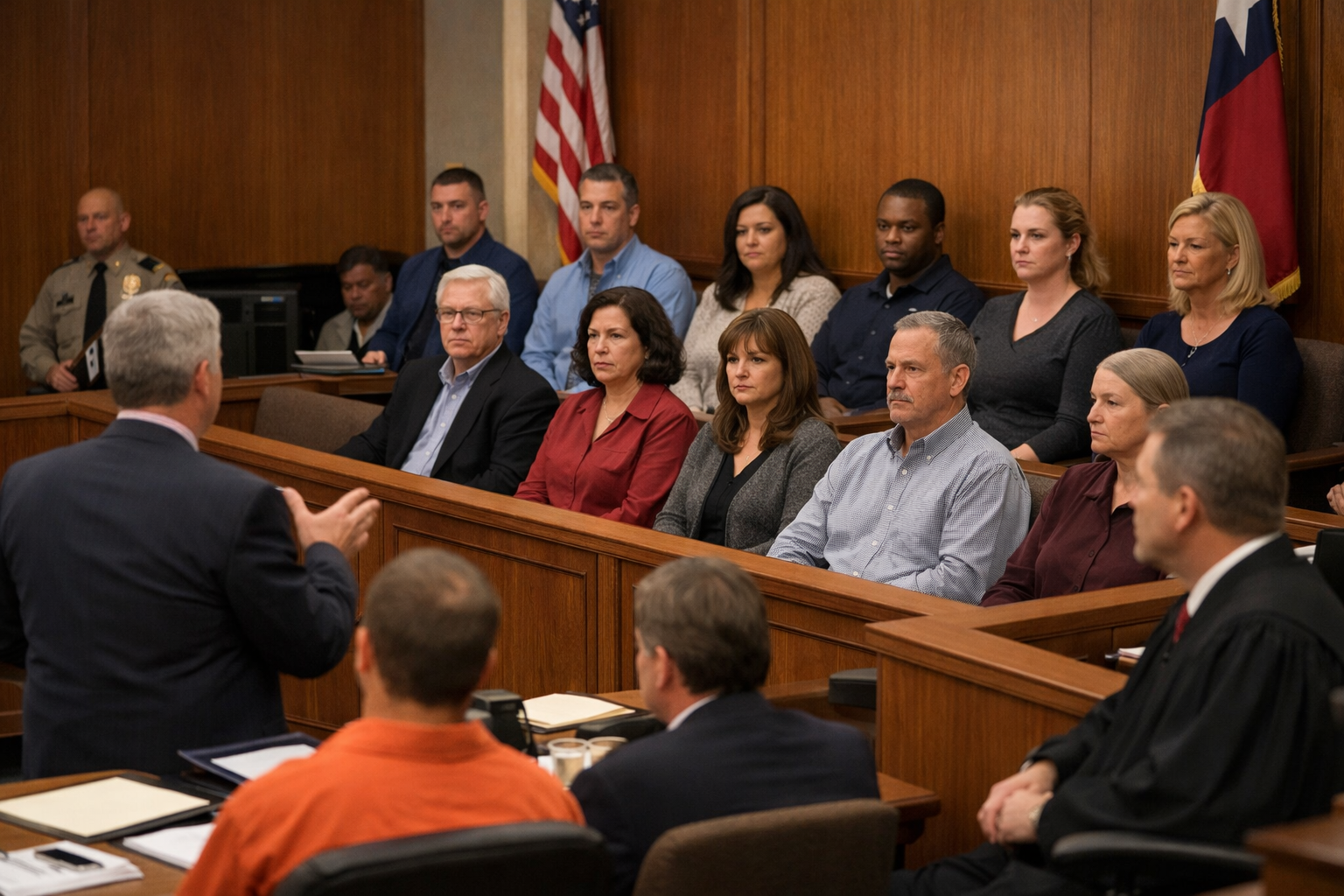
Capital Murder Cases in Texas: A Primer
In this post, I explain the basic mechanics of a capital murder trial in the state of Texas.
Introduction
This post is part of my series exploring the death penalty. For much of my life, I supported capital punishment, and I eventually became the foreman of a jury that sent a Tarrant County, Texas man to death row in 2012. Here, I talk about how capital murder trials work in Texas and how a death sentence is ultimately decided.
In this post, I simply want to walk through the mechanics of a Texas capital murder trial—how it works, who the parties are, what the jury's responsibility is, etc. I want to be clear up front that I am not a lawyer, and I have no professional law experience whatsoever. Everything I have learned about criminal law and the judicial system has come from my experience walking it out as a juror, as well as from research I conducted after our trial ended in 2012.
I'm also not going to go into the history of capital punishment in detail here. If you are interested in its story, I encourage you to check out the Death Penalty Information Center's page on death penalty history.
The Basics of a Texas Capital Murder Trial
- Guilt/Innocence Phase – The jury decides whether the defendant is guilty of capital murder.
- Punishment Phase – If the defendant is found guilty, a second phase begins to determine the sentence.
- Three Special Questions – The jury must answer specific legal questions that guide the sentencing decision.
- Final Outcome – The result is either death or life in prison without parole.
One thing I did not understand before becoming a juror for a capital murder trial in Texas is that death penalty cases are much lengthier and more involved than most other criminal cases.
First, capital murder trials are bifurcated. This means that there are two parts to the trial. The first phase is the guilt/innocence phase. This is when a jury decides whether the defendant is guilty or not guilty. If the defendant is found not guilty in this phase, the trial ends and the defendant goes free. If, however, the jury finds the defendant guilty, then the trial moves to the sentencing phase in which the jury determines the sentence for the defendant. Each phase of the trial is basically its own trial. When the sentencing phase begins, both sides make opening remarks and begin to present a whole new case to the jury. The sentencing phase can have different witnesses and even different evidence presented than was presented during the guilt/innocence phase.
Second, if a district attorney seeks the death penalty, both the guilt/innocence and the punishment will be decided by a jury of 12 citizens. If the death penalty is not sought, it is possible for the case to be decided by a judge. But in a death penalty trial, a jury has to decide guilt/innocence as well as punishment.
Third, death penalty trials require at least two defense attorneys. This is an attempt to ensure the defendant gets adequate representation. As you might expect, many defendants cannot afford an attorney, so often times the defense team is court-appointed or consists of public defenders. Defense attorneys in death penalty trials must have special qualifications and experience in order to defend someone in a death penalty case.
Fourth, capital murder cases in Texas have ony two possible sentences: Death or life in prison without the chance for parole. This has not always been the case in Texas. That is why you might hear older stories of men on death row eventually being released on parole. But since 2005, the sentence is either death or life in prison without the possibility of parole.
Finally, the sentence in a death penalty case is decided by a jury answering three special questions.
The Three Special Questions
Before being called to serve on a death penalty jury, I—like many people—just assumed that when a jury decided in favor of the death penalty, it was more or less a matter of having the jurors raise their hands if they thought the death penalty should be the punishment. As it turns out, that is not at all how a death sentence is decided.
Texas—and many other states as well—has a series of special questions that a jury must answer in order to determine whether a defendant goes to death row. The judge gives very specific instructions to the jury to work through all three of these questions in the order in which they are presented. In other words, the jury may not arbitrarily decide to jump to question three before finishing question one. And in order for the jury to move on to the next question, they have to be unanimous in their answer.
Special question number one states: Is there a probability that the defendant would commit criminal acts of violence that would constitute a continuing threat to society? If all 12 jurors say "yes" to this question, then the jury moves on to special question number two. Per the judge's instructions, if 10 jurors answer "no," then the sentence automatically becomes life in prison without parole.
I want to be very clear about something at this point. The judge's instructions to us indicated we either had to have 12 in favor or 10 against. There was no in between. This is a point I will address in a later blog post.
If the jury answered "yes" to special question one, then they move to special question number two—assuming there is more than one person involved in the crime. If there was only one person involved in the crime, special question number two is skipped. Special question two states: Did the defendant actually cause the death of the deceased or did not actually cause the death of the deceased but intended to kill the deceased or another or anticipated that a human life would be taken? Again, the jury deliberates this question and is instructed to either form a unanimous "yes" opinion, or 10 jurors have to answer "no." A unanimous "yes" means the jury proceeds to special question number three. A "no" means the defendant goes to prison for life without the chance of parole.
Special question number three states: Taking into consideration all of the evidence, including the circumstances of the offense, the defendant's character and background, and the personal moral culpability of the defendant, is there a sufficient mitigating circumstance or circumstances to warrant that a sentence of life imprisonment without parole rather than a death sentence be imposed? Here, the jury is instructed to answer either 12 "no" or 10 "yes." Again, per the judge's instructions, there is no in between. And this is where a death sentence ultimately gets decided. If the jury has reached special question number three and unanimously answers "no," then the sentence becomes death.
Conclusion
And that is the basics of how a death penalty case in Texas gets decided. Obviously, there is much more nuance to the process than what I have presented here. And because I don't know details of all the laws, I'm sure there are many subtle aspects of a death penalty trial that I am unaware of. But this gives you some idea of the process for deciding whether a person is sent to prison for the rest of their natural life or if they get sent to prison to be executed.
I can tell you from my experience as a juror that answering these questions becomes much more than just a legal process. There is a moral responsibility that I felt—especially as more time passed after the trial—that I did not fully anticipate at the time. I will talk more about this in future posts.
In my next post, I will explore how the voir dire—the choosing of the jury—impacted me personally and how it began to subtly shape my longer-term thinking about the death penalty.