



Jury Selection: A Subtle Shift Begins
In this post, I discuss the subtle shift that began taking place in me during the jury selection process of the death penalty case for which I was foreman.
Introduction
This post is part of my series exploring the death penalty. For much of my life, I supported capital punishment, and I eventually became the foreman of a jury that sent a Tarrant County, Texas man to death row in 2012. Here, I discuss the subtle changes that began to take shape in me during the jury selection process.
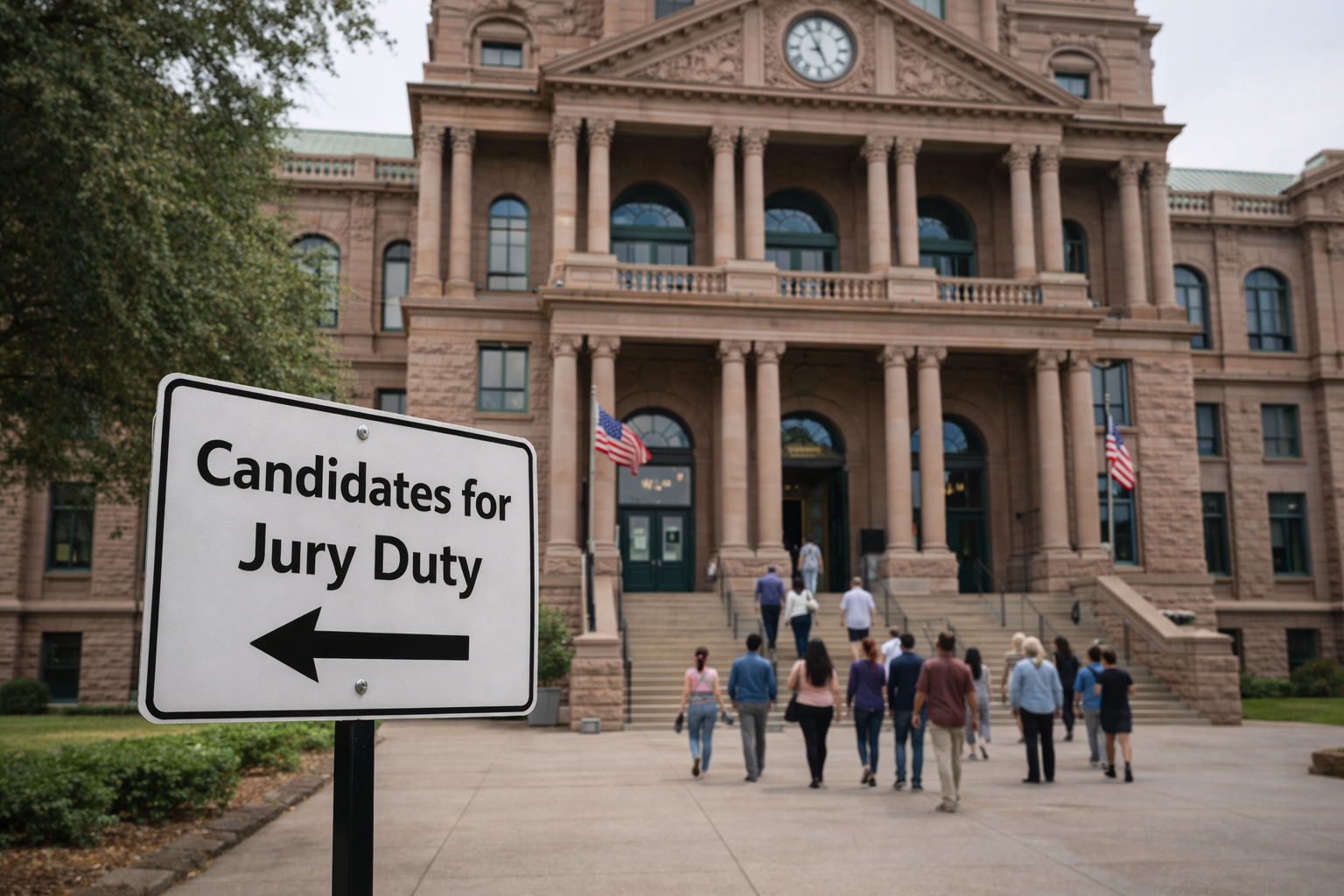
As I drove to the Tarrant County courthouse in Fort Worth, Texas on the morning of September 15, 2011, I assumed this jury duty would mirror nearly every other jury duty I had experienced. I figured I would sit and wait for a couple of hours with dozens or hundreds of other people. I might get asked a question or two by some attorney, but that would be it. They would ultimately send me home in the early afternoon, and my civic duty would be complete.
Reality turned out to be much different than anything I expected.
The Visual Assessment of the Jurors
I arrived at the courthouse a minute or two before the prescribed time. I know. I was cutting it close, but I really didn't care. I figured if I was a little late and they had a problem with it, they were welcome to send me home.
When I walked up to the central jury room door, it was open. Two middle-aged men dressed in suits stood just inside the doorway as I walked through. Each had a clipboard and were actively writing things down. I noticed that they looked me up and down from head to toe as they made some kind of notes on their clipboards. Immediately I knew this voir dire—the jury selection process—was going to be different.
I had been called for jury duty nearly a dozen times before. But I had never had anyone scrutinize me so closely as I arrived. I looked around the room and realized it was nearly full of potential jurors. This room—which is actually a large courtroom—was large enough to hold 200-300 people. This was way more potential jurors than I had ever seen in the past. By this point, my heart sank. I knew my hopes of getting out of there anytime soon had just been obliterated. I didn't yet know the case was a capital case, but I knew it must be some kind of big case.
Re-seating the Juror Pool
After I walked past the men in suits, I made my way to the back of the room and found an empty chair. In my past jury duty experiences, attorneys always started questioning the potential jurors at the front of the room. Often times they would find 14 (12 jurors and two alternates) people for a jury long before they got to the back of the jury pool. On this day, I hoped the same might prove true. There were around 215 people in the jury pool that day, and I was sitting in about the 175th spot. Seemed like decent odds to me.
The next thing I know, the bailiff announced that they were going to re-seat the jury pool. One of the men in suits handed her a piece of paper, and she began to call out names and the numbers that had been assigned to them. She called my name and assigned me number 35. Suddenly, my odds of being picked for this jury had gone up dramatically.
The Questionnaire From Hell
Once we were re-seated, the bailiff began to give us instructions. First, we were going to be given a questionnaire to fill out. She indicated this questionnaire could take several hours to complete. Once we were finished, we were free to turn it in and go have lunch. We then had to return to the court that afternoon for further instructions.
The questionnaire was quite extensive. It asked many types of questions. Was I related to anyone in law enforcement? Was I related to an attorney? Had I ever been on a jury? Just because someone is accused of a crime in court, did I automatically think they were guilty? Had anyone I'd ever known been murdered? Had I ever been convicted of a crime? Was I familiar with the defendant in this case? Was I familiar with the victim? Did I believe the death penalty was ever warranted? Did I ever watch courtroom TV dramas? What was my religious persuasion? What kind of job did I have? Had I ever witnessed a violent crime?
The questions went on and on. It was exhausting. I felt like I was in a high school English class again, and I had to complete some drab essay before I could leave the room.
By the time I left for lunch, I was a little numb. I knew from the questions that this was almost certainly a capital murder case, but it hadn't set in yet that I might actually end up on the jury deciding a man's fate.
Reflections At Lunch
As I sat and ate lunch at a small Mexican cafe near the courthouse, I began to reflect on the questionnaire. The more I thought about it, the more I realized I was most likely a prime candidate for this jury. First, I had already served on a jury—for a speeding ticket—several years prior. Second, I didn't believe the death penalty should be used often, but at this point in my life, I did believe that in cases where there was clear-cut evidence of premeditated murder, it was warranted. I knew these two factors would likely make me appealing to both sides.
As I began to consider that fact, I also began to ask myself if I could actually send someone to death row. Not yet understanding how the law worked or how death sentences were ultimately decided, I did a self-check and determined that I could indeed send someone to death row if they "deserved" it. Still, inside I hoped that I would not get picked for this jury. Just because I thought I could send someone to death row did not mean I wanted to test that theory.
Introducing the Defendant
When I returned to the courtroom (the jury room), I was surprised to see countless sheriff's deputies lining the entire perimeter inside. I sat in my seat and noticed that now there was a judge, a court reporter, the two men in suits along with two other men in suits, and a young man sitting on the stand. The young man was well-dressed, and he was smiling and laughing a bit. When I first saw him, I thought he might be the defendant, but then when I saw him laughing, I figured he could just be a witness or some expert of some kind. As it turned out, it was Kwame Rockwell, the defendant in this case. I assumed the defense was attempting to project an image. It was an image of a professional young man who wasn't concerned about his fate. No professional young man would ever commit a heinous murder, right? I will admit that right off, I had some doubt about the honesty of the defense team. Kwame was just dressed too nice. Had he been in a button down shirt and nice pair of pants, it might not have struck me as it did. But they had Kwame dressed in a nice suit—tie and all. And that seemed to me like they were trying too hard to make an impression.
Incidentally, the two additional men in suits turned out to be the prosecuting attorneys.
Once the court had been called into session, the judge explained the basic aspects of the case to us. She indicated that the young nicely-dressed man on the witness stand was the defendant, and she introduced all the attorneys involved in the case. At this point, she gave us very specific instructions about what we could and could not say to people while we were still being considered for the jury. She also told us not to read newspapers or watch TV news segments about this case. She then informed us that some jury candidates would be released that afternoon, and that would be the end of their jury service. But for others, they would be required to return to the court at a later date for individual interviews.
Only then did I begin to see just how big a deal this case was. The jury wouldn't even be selected in one day. It was going to take months of interviewing potential jurors before the defense and prosecution would actually pick the jury. The bailiff then handed each of us a piece of paper that showed whether we'd be required and when to come back for an interview. Mine was set for several weeks later. For me, the saga would continue.
The Voir Dire Interview
I was told that I should expect my one-on-one voir dire to last about an hour. I expected that they would put me in a room with both sets of attorneys and maybe a judge to ask me some questions. I had an image in my head of sitting around a conference table and having a friendly chat. As it turned out, my experience was anything but.
When I got to the court that day, the deputy ushered me into an actual courtroom. Immediately, I was asked to raise my right hand and swear to tell the truth, the whole truth, and nothing but the truth. It's probably a good thing I had no clue as to what was about to transpire because I didn't even have time to register what was happening.
After being sworn in, I was told to sit on the witness stand. The judge was sitting next to me. Just in front of me was a court reporter. Just beyond her were both sets of attorneys sitting at a table. The defendant was seated next to the defense team. I was suddenly feeling out of my depth.
Right away the attorneys started explaining the process of trying a death penalty case and asking me questions. This was the first time I heard of the three special questions, and it was the first time I learned that those questions ultimately dictated the sentence in a death penalty case.
The attorneys had clearly studied my questionnaire because they were probing me about the answers I had provided. Did I really believe the death penalty was warranted sometimes? If so, when and in what situations? Did I have any religious grounds for supporting or not supporting the death penalty? Would I say that all murders are just misunderstandings gone bad? On and on the questions went. For over two hours!
At times, an attorney would ask me something, and the other side would object, and I'd have to wait for the judge to tell me to proceed or not. At times, I gave too much information, and the judge had to instruct me to only answer the question being asked. At times, it seemed as if the attorneys were trying to goad me into saying something self-contradictory or foolish. The truth was, I felt like I was the one on trial that day.
Self-Reflection
Though I was a bit numb after my voir dire interview, several things occurred to me. And as I pondered the experience over the following weeks, I began to become subtly aware of truths surrounding the death penalty I had never known.
- The defense team in this case seemed a little annoying. It was usually the defense that was asking me pointed, almost self-trapping questions during the voir dire. Already, I was starting to not trust them. And though I didn't think through this fully at the time, I later recognized how this quietly gave me a pre-trial bias against them. Now, to be clear, I would have still found Kwame Rockwell guilty of capital murder. There simply is no question about his guilt. But would I have deliberated the sentencing phase differently had I not had that bias? It's hard to say, but it's certainly possible. It definitely made it more difficult for me to give the defendant the benefit of any doubt.
- I realized that the cost to the county taxpayers for this trial had to be much greater than the cost of other trials. If every juror candidate was experiencing the same thing I was, that was adding up to a lot of hours for attorneys, the judge, the court reporter, the bailiffs, etc. In my past jury duty experiences, the jury was picked within an hour or two. This was dragging on for months.
- There was much about the law that I was unaware of. The three special questions are a case in point. I simply had no idea that juries had to meticulously walk through a series of questions in order to determine a death sentence. At first, this process gave me comfort because it seemed to provide guidance to the juries for deciding punishment. It wasn't until I actually sat around a table with 11 other jurors deliberating these questions that I began to see the true arbitrariness of the special questions. I will go into more detail about this in a future post.
- This was the first time I began to feel the potential weight of being on a death penalty jury. Looking around that courtroom during my voir dire, I realized that none of those other people were going to ultimately decide Kwame Rockwell's fate. They were all professional law people. They understood how the law works—what can and cannot be said in a courtroom, who can get called to testify, the totality of a juror's job, etc. If I were selected to the jury, I would not have that advantage. And yet, I would be one of 12 people deciding this man's fate. That felt quite heavy, if not slightly unfair.
- During the voir dire, I learned that the system is designed to ostensibly remove emotion from the jury's decision. But I also knew this was impossible. And ironically, even during the voir dire, the attorneys were playing to my emotions, testing how I would react to pointed, almost accusatory questions and trying to get me emotionally attached to their sides.
- Finally, this process taught me that ultimately the attorneys are not looking necessarily for the most morally-balanced jury. They are looking for a jury that can follow instructions and is willing to operate within prescribed judicial boundaries. While these two things are not necessarily mutually exclusive, it highlighted to me the possibility that a jury might not be the best 12 citizens for the defendant.
Conclusion
The jury selection process for a death penalty case in Texas is very lengthy and intricate. For anyone called to jury duty for a death penalty case, I suggest you buckle up.
If you ever find yourself in this situation, I encourage you to consider several things:
- Your resolve will be tested. Make sure you know what you believe and that you can articulate it clearly.
- Be observant. Ask yourself, "What is being said here, and what is left unsaid?" Be aware of where the attorneys are attempting to take you.
- Stay grounded. Trust yourself. Trust your gut. And don't let hyper-emotional talk pull you in.
- Take note of assumptions that are being made—about you, about other jurors, about the defendant, about witnesses being called, even about the judge and the attorneys. How are those assumptions affecting the progression of the voir dire or the trial itself?
In my next post in this series, I will delve into the psychological weight of being a juror for a death penalty case. I will explore the emotional and cognitive pressures that arose as a result of determining a man's fate.
Questions or thoughts? Reach out to me at my contact information below.